


Tearing down an old structure can feel like a clean slate, but the bill rarely matches the first quote you get. You already know the headline price for the structural teardown, yet a swarm of smaller fees can still ambush your wallet and push the project over budget.
Use this guide to spot those “extra” costs early—so your demolition timeline stays on track and your rebuilding budget doesn’t balloon. A little homework now can save you four-figure surprises later and keep the demolition services crew marching forward without delays.
Permit Fees You’ll Face
Getting permission to knock down a house is more than a rubber-stamp chore; it’s a line item in your budget. All local building departments charge for plan reviews, inspection trips, and paper filing, and the difference in permitting fees is likely to be broader than you expected.
- Standard residential demolition permits are usually around $100 – $500 in many U.S. cities.
- Historic districts (https://en.wikipedia.org/wiki/Historic_district) or environmentally sensitive areas may add thousands in review fees.
- Some municipalities roll demo and building permits together, so ask whether a bundle could save you money.
- If your demolition contractor handles the paperwork, clarify whether their service fee is on top of or included in the permit figure.
Double-check whether you’ll also owe impact, tree-removal, demolition waste management, or right-of-way fees—each can add another $50 to $300. Some jurisdictions require a pedestrian-protection permit or a refundable demolition bond that only comes back when the lot is cleared to code. Keep an eye on the permit’s expiration date; if inspections stretch past that window you’ll pay to renew.
Filing early prevents schedule slip, which can trigger equipment stand-by charges and eat into your contingency fund. Finally, keep copies of paid receipts; you’ll need them for future utility reconnections and your lender’s draw schedule.
Surprise Hazardous Materials
Houses built before the late 1980s can hide nasty surprises like asbestos siding, lead paint, or PCBs in old caulk. Testing is cheap; removal is not, and you can’t skip it.
- Asbestos abatement averages $8 – $13.50 per square foot, and whole-home jobs begin around $5,000 – $20,000 depending on scope.
- Lead-paint disposal runs $8 – $15 per square foot once specialized crews suit up.
- PCB-laden caulking or mercury thermostats add lab fees and special landfill charges.
- Local landfills may refuse hazardous debris outright, forcing you to haul it to a regional facility.
Asbestos may not only be in the insulation; the vintage vinyl tiles, the roof felt, or the texture on the ceilings could all cause a positive result. If you are doing a house demolition Coeur d’Alene, contact the Panhandle Health District first; they will provide you a list of approved hazardous waste facilities and will also provide you the paperwork you need. Insurance policies will rarely cover the abatement, so just plan for cash instead of claims.
Build at least one week into the calendar for lab results and remember that bad news can push workdays and dumpster rentals further out. Tackling hazardous waste up front keeps neighbors safer and prevents stop-work orders that could blow your overall selective demolition strategy. Radon systems and oil-tank soil tests may also appear on the inspector’s punch list, so ask for a complete hazardous-materials survey before you start swinging.
Utility Capping Charges
You can’t swing a wrecking ball until every service line is dead. Expect to pay licensed pros to cut, cap, and tag each utility—and for mandatory inspections that prove the job was done right.
- Water and sewer disconnect: $500 – $1,500 depending on street access and pavement patching. Click here for more information.
- Gas lines: $300 – $800, plus an inspection fee from the gas company.
- Electric feeds: $250 – $600 to pull the meter, kill the drop, and secure the panel.
Costs skyrocket when lines run under concrete or share conduits with a neighbor, because you’ll need extra excavation and a city inspector on-site. For rural properties, private wells must be sealed by a licensed driller—often another $800 – $1,200. Schedule shut-offs at least ten business days out; some utilities book service windows a month in advance. Don’t forget to call 811 so underground cables get flagged before anyone digs.
Many telecom companies require their own technicians to remove fiber or phone drops; missing that appointment can stall the entire controlled demolition phase. Missing a capping slot also means paying the crew to sit idle—a sneaky expense that rarely shows up in the first quote.
Debris Hauling Add-Ons
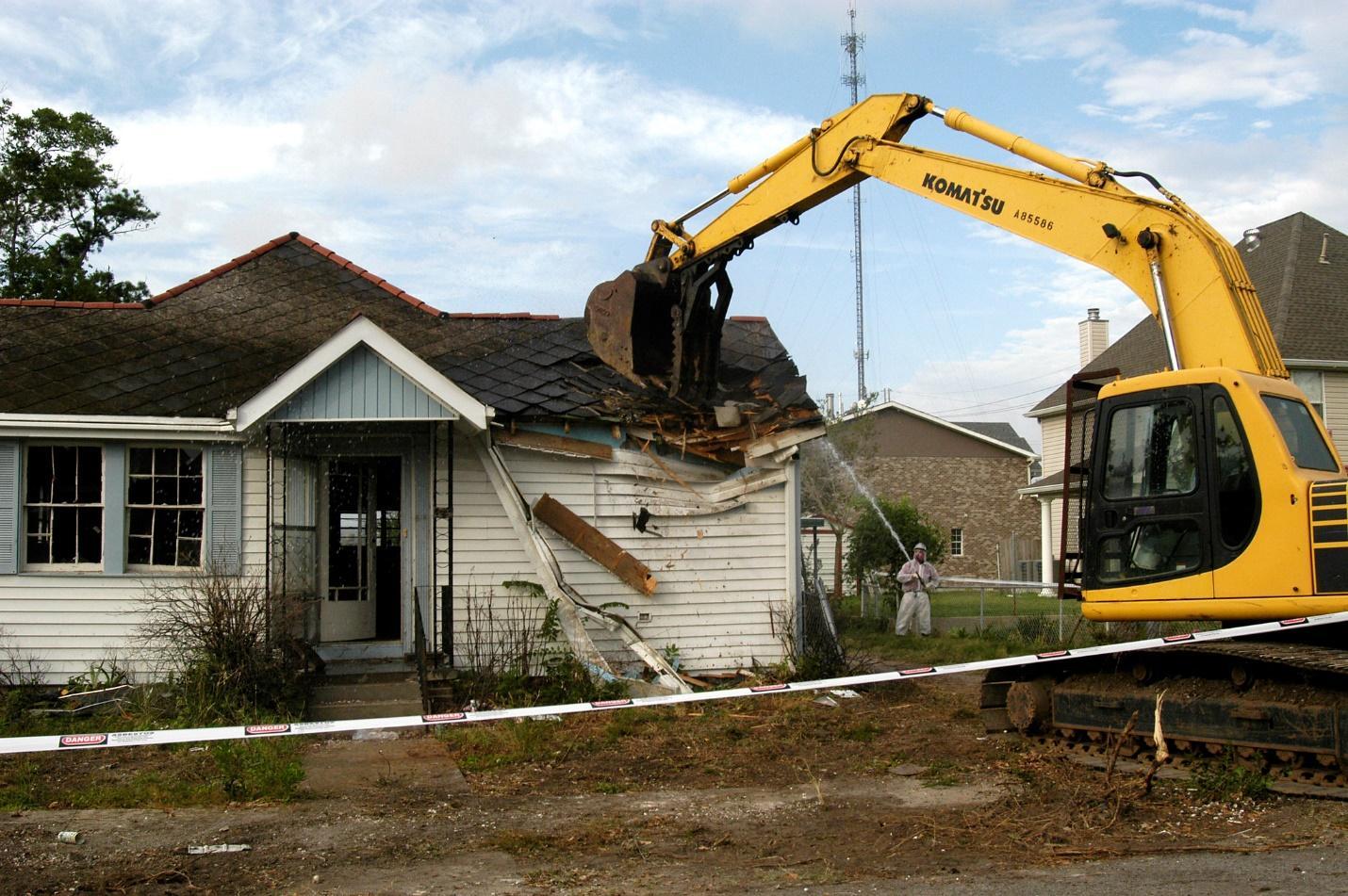
Knocking down walls is fun; paying to move the rubble isn’t. A 1,600-square-foot house can leave 60 tons of debris, and every pound needs a legal ride off-site.
Sorting on-site can cut landfill expenses by up to 25%. Ask whether crushed concrete can stay onsite as backfill; reusing it trims trucking miles and fees. If your project overlaps a holiday week, reserve dumpsters early—haulers book up fast. Rain adds water weight, which can push a dumpster over its tonnage limit and trigger surprise penalties.
A well-planned interior strip-out that removes salvageable fixtures before the excavator arrives can shrink both dumpster counts and tipping fees. Call your landfill ahead to verify hours; some switch to winter schedules that close an hour earlier, and one missed gate can set your residential demolition services calendar back a day.
Contingency Buffer Advice
The tightest bids can go bust when weather delays work or you run into an unknown situation (like finding a buried oil tank). A buffer will protect you.
- Use 10 – 15 % of your total quoted project as a contingency line.
- Keep the money liquid; you may need to spend money on a short notice specialist.
- If the project comes in under budget you can roll that money into insulation or a patio, two smart moves that will increase resale value.
Do not be tempted to use the contingency in order to buy cheap fixtures when they are on sale – the contingency exists to absorb genuine surprises. Maintain a simple spreadsheet of all unplanned costs in order to improve your estimates in the future. When you negotiate with contractors let them know you have a contingency, but that it is not a blank cheque if they are over budget. Ask your builder to think about value engineering; sometimes changing certain materials or methods of demolition can reduce costs without reducing quality.
A clear plan, honest numbers, and some contingency will help ensure you remain in control, and even help you to guarantee that your building demolition cost does not consume all the funds you set aside for the new foundation.